


There's a feeling of anticipation. Visible is the frosty air emanating from my fellow runners as they perform the "pre-race" shuffle on the start line.
A swift twitch of the hips.
I'm lined up for my local weekly parkrun event and I'm focused. It's almost time...
Wait a second. I need to start my device. The same goes for the guy next to me.
The person in the line tuts. I won't start until… done! Signal acquired, and I'm running.
In the mele, it's challenging to spot a person without a fitness tracker on it. And this isn't only us runners who rely on them.
This is a booming, multi-billion pound market. Names like Apple Watch lead the market, each with an wide range of diverse devices to fit a variety of budgets. According to how feature-packed the device you select, prices can vary between a hundred pounds to thousands of pounds.
"It drives me insane, it's impossible to switch off."
"It provides solace… It acts as a supporter guiding me."
"Stop telling me about a restless night."
A handful of the reactions I've had from fellow tracker enthusiasts when I ask what they think of theirs.
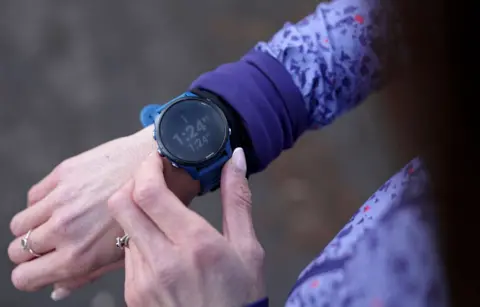
The Monitoring Conundrum
My thoughts on mine? Currently, irritating. It's reporting I'm off pace, making me wonder whether the foliage I'm running below are interfering with my satellite signal.
Millions of us attach these compact monitors onto our arms and use them 24/7, ostensibly unconcerned with the fact they're perpetually monitoring us.
Long past are the days when we depended on them exclusively to give us an rough count of our pedometer reading. Currently, they can track our nightly rest, stress levels, glucose levels, our VO2 max.
It's tricky to find a physical metric they fail to monitor.
But do they do what they advertise? And are the statistics we obsess over a true reflection of the truth? Do they improve our overall health, or do the plethora of readings and cheerleading alerts just increase our sense of overwhelm?

Addiction or Aid?
"I become a bit obsessed with mine," an individual reveals.
While she appreciates how her device records her runs, she finds some of its other functions "daunting" at times - a feeling that became apparent during a significant period.
Prior to discovering she could adjust the settings, her smartwatch constantly alerted her she was not being productive enough. Later on, the watch insists her she's had a bad night's sleep.
"I have a infant, I don't need to be notified my sleep was poor," she says. "That fact is all too clearly."
Couldn't she just stop wearing it?
"I could, I suppose, but I'm in this love-hate relationship with it," she continues. "I appreciate it for its exercise data, but I'm unsure whether all the other things it can now do is perhaps overkill for me."
How Do They Work?
Every device of smartwatch has its own novel way of measuring your vitals and interpreting your data, but the most use detectors on the back of the watch.
They usually shine minute LED lights onto your arm which can observe blood flow, detecting your pulse rate. Sophisticated devices measure changes in the electrical current that flows through the skin to gauge your nervous system activity.
The Professional Viewpoint
One expert says that overall for smartwatches, it's a "fine balance" - while the continuously improving tech could realistically prevent illness, "spotting abnormalities before we feel unwell", it could also turn us watch wearers into the "anxious healthy".
He points out that newer wearables can perform tests like medical-grade monitoring, which constantly monitor how normal the heart is. They can notify if someone is experiencing atrial fibrillation (AF), where there is abnormal electrical activity in the heart causing an uneven pulse.
This does not necessarily indicate someone is about to have a cardiac event, but it can give an advance notice they might be more vulnerable of a heart problem in the future.
But how to interpret these readings is complicated. The expert worries that as additional features are added, people may find it hard to fully comprehend their data.
"I remain sceptical that the ability to monitor so many things is such a beneficial thing," he says.
A professor focusing on patient behaviour concurs. Research into the effect of wearable tech on a set of individuals with health issues suggested a noticeable percentage of those who were given devices to monitor their condition experienced increased anxiety and were "far more likely to use doctor's time".
She observed a pattern with her patients - they saw a alarming metric on their watch. They became worried. Their BPM rose. They got more worried. They re-examined the data, and their reading went up again.
"If we see data about ourselves that we can't properly interpret then, of course, we are going to want to know more," the psychologist says. "We check, we re-check - it becomes a vicious cycle."


